What Is Crisp Grass Carp? Science, Farming Practice & Culinary Potential
Introduction — Understanding the Unique Texture
Crisp Grass Carp, in chinese 脆肉鲩 or 脆肉皖, is a texturally distinctive form of farmed grass carp that has captured attention from chefs, seafood processors, and researchers for its firm, “crisp” muscle texture. This is not a different species but a result of specific feeding and husbandry practices, most notably the use of faba beans (Vicia faba) or related dietary treatments. Recent biochemical and transcriptomic studies shed light on how this crisping occurs, while applied aquaculture trials provide practical guidance on timing and feeding durations.
How Faba Beans Transform Muscle Texture
A growing body of peer-reviewed research demonstrates that faba-bean feeding modifies grass carp muscle at molecular, cellular, and lipidomic levels. Key effects include:
-
Muscle-fiber and collagen changes: Altered fiber architecture and increased collagen deposition enhance firmness.
-
Gene expression shifts: Fibrosis- and muscle-hardness-related pathways are upregulated.
-
Lipid composition adjustments: Specific lipid class changes correlate with firmer texture.
Controlled trials indicate that crisping can appear within weeks to a few months, depending on fish size, diet formulation, and husbandry. Feeding windows of roughly 60–150 days are commonly reported for observable textural changes.
Practical Farming Practices for Crisp Grass Carp
When to Start Faba-Bean Feeding
Producers typically begin faba-bean supplementation once fish reach juvenile or early marketable sizes, usually around 1–2 kg (2–4 lb). Some trials also used larger fish (~2.9 kg), which then underwent specialized feeding for a defined period.
Feeding Duration for Crispness
Experimental and commercial practices report effective crisping over 60–150 days, with pronounced textural changes often observed after 100–120 days under controlled feeding. Duration depends on initial fish size, feed composition, faba-bean proportion, and husbandry conditions.
Methodology Notes
Faba beans are often soaked or softened and provided as a major component of the daily ration. Some producers use formulated feeds containing faba-bean fractions or “crisping” extracts. Routine monitoring of weight, feed conversion, and texture guides the end of the special feeding phase.
Mechanism Behind Crispness
Faba-bean constituents, including vicine and related glycosides, provoke oxidative and metabolic responses in muscle tissue. Repeated cycles influence muscle repair, collagen deposition, and extracellular matrix remodeling. Transcriptomic and lipidomic analyses reveal candidate pathways—such as fibrosis-related genes, Hippo signaling, and lipid shifts—that explain why crispness is reproducible under standardized feeding regimes.
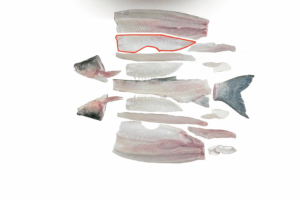
Nutritional Snapshot
Crisp Grass Carp maintains the nutritional profile of standard grass carp, with unique texture properties. Representative laboratory analyses of slices report:
| Nutrient | Typical Range per 100 g |
|---|---|
| Protein | ~13.9 g |
| Moisture | ~76 g |
| Fat | ~7.3 g |
| Sodium | ~780 mg |
Additionally, increased collagen and altered amino acid composition contribute to the firm mouthfeel. These attributes make crisp grass carp competitive with other widely consumed fish, combining nutrition and culinary performance.
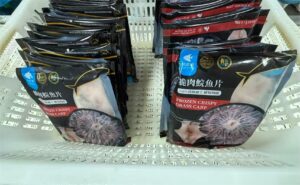
Product Forms — Starched Crisp Grass Carp Slice
In commercial channels, Crisp Grass Carp is offered in various processed forms. When cut into slices for retail or industrial kitchens, a light starch coating is applied for handling and presentation.
Important distinctions:
-
Starched Crisp Grass Carp Slice: Lightly coated slices, convenient for industrial kitchens or hotpot applications.
-
Unmarinated / minimally processed slices: No additional marination or complex preparation is needed.
The “starched” designation applies only to sliced products, while the underlying crispness comes from the rearing and diet.

Culinary & Industrial Performance
Crisp muscle structure provides measurable advantages:
-
Improved bite firmness for dishes where texture matters.
-
Reduced breakage during gentle handling or extended cooking.
-
Reliable performance for automated slicing, packaging, or bulk distribution.
These properties are valuable for hot-pot suppliers, ready-meal manufacturers, and seafood processors seeking consistent texture in downstream applications.
Considerations for Buyers & Specifiers
When evaluating Crisp Grass Carp:
-
Specification clarity: Confirm rearing protocol, feeding duration, fish size at harvest, and post-harvest treatments (starch coating, glazing, marination).
-
Quality verification: Ask about on-farm or plant QC procedures, including texture checks.
-
Label & regulatory compliance: Ensure ingredient declarations, allergen statements, and feed-related residues meet market requirements.
-
Sampling & trials: Pilot trials are recommended to match textural expectations before large-scale procurement.
Crisp Grass Carp is a reproducible textural phenotype achieved through dietary manipulation, most commonly faba-bean supplementation. Combined evidence from molecular studies and practical feeding protocols enables producers to deliver consistent raw material for chefs and processors. Attention to rearing details and post-harvest processing ensures the product fits intended culinary and industrial applications.
If you’d like to learn more or have any questions, feel free to reach out to me:
- Email: chloe@chfseafood.com
- WhatsApp: +86 13727050518